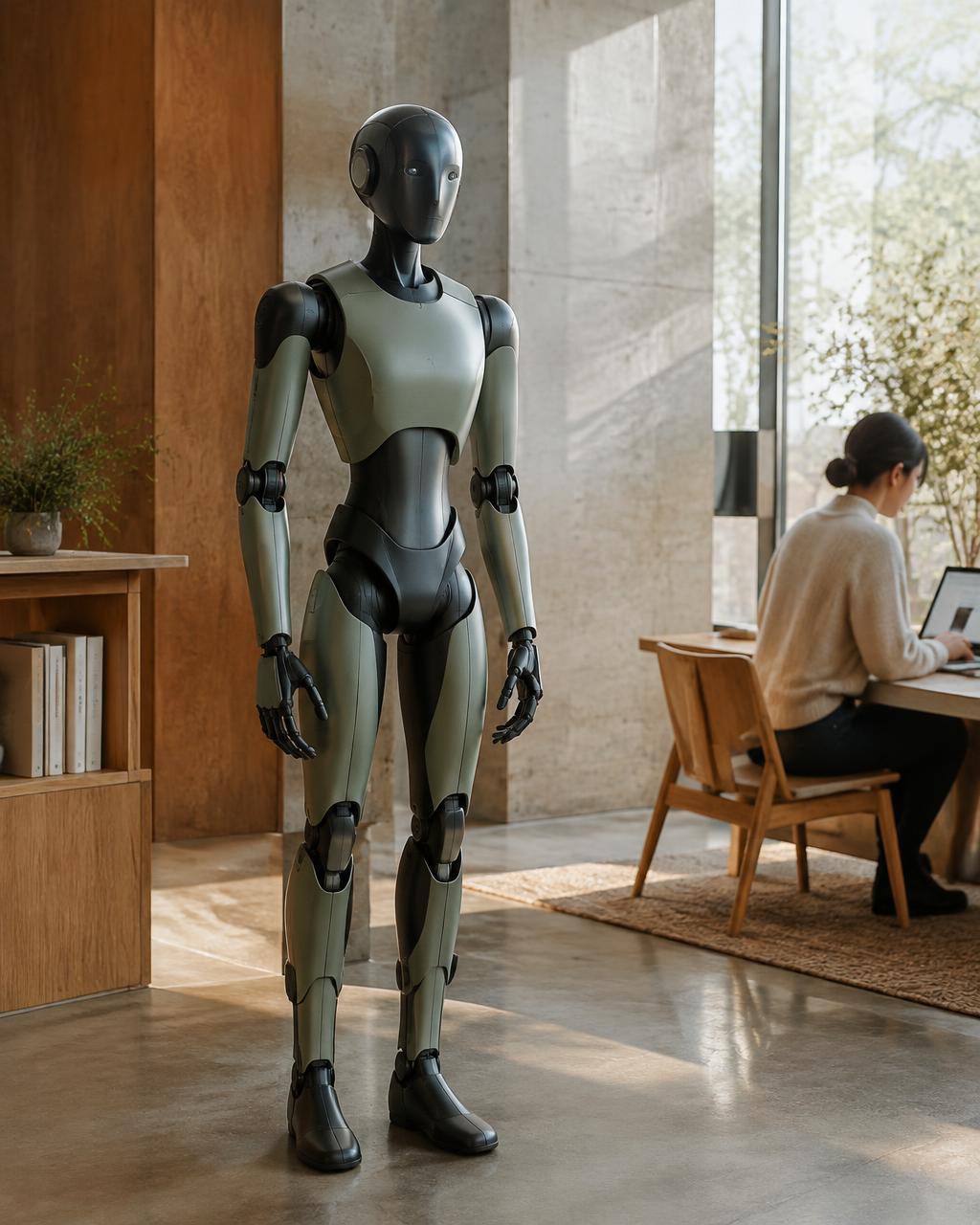
Designed around everyday operations
Small Tasks. More Room for Human Work.
Optimus is an independent humanoid assistant concept exploring practical support for the routines that keep a workplace moving.
Explore Everyday Support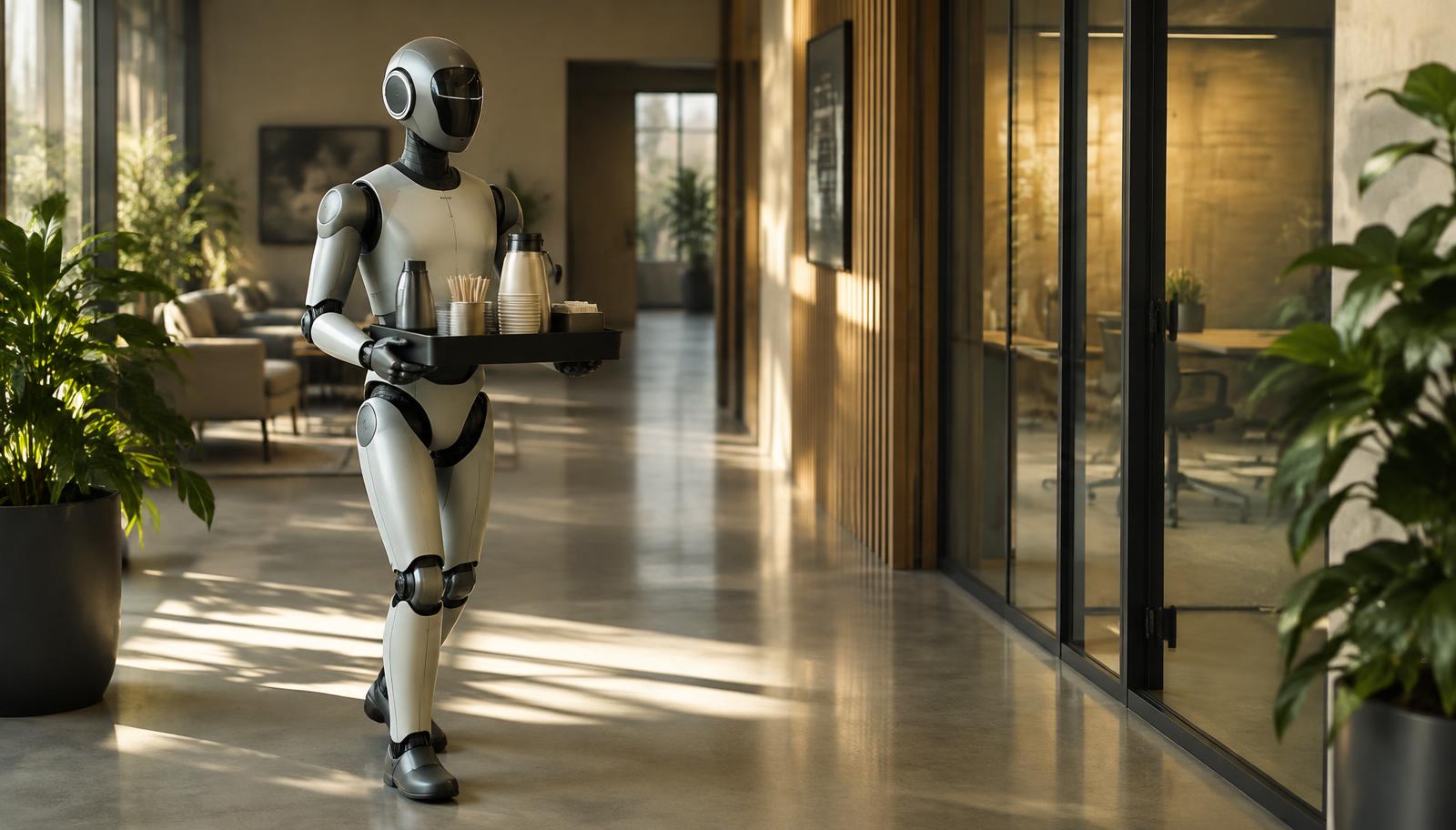
About the concept
Technology That Fits the Day
Every workplace runs on dozens of small, recurring tasks. Optimus imagines a humanoid assistant that could help with some of them — carrying, arranging, resetting — so people have more time for the work only they can do.
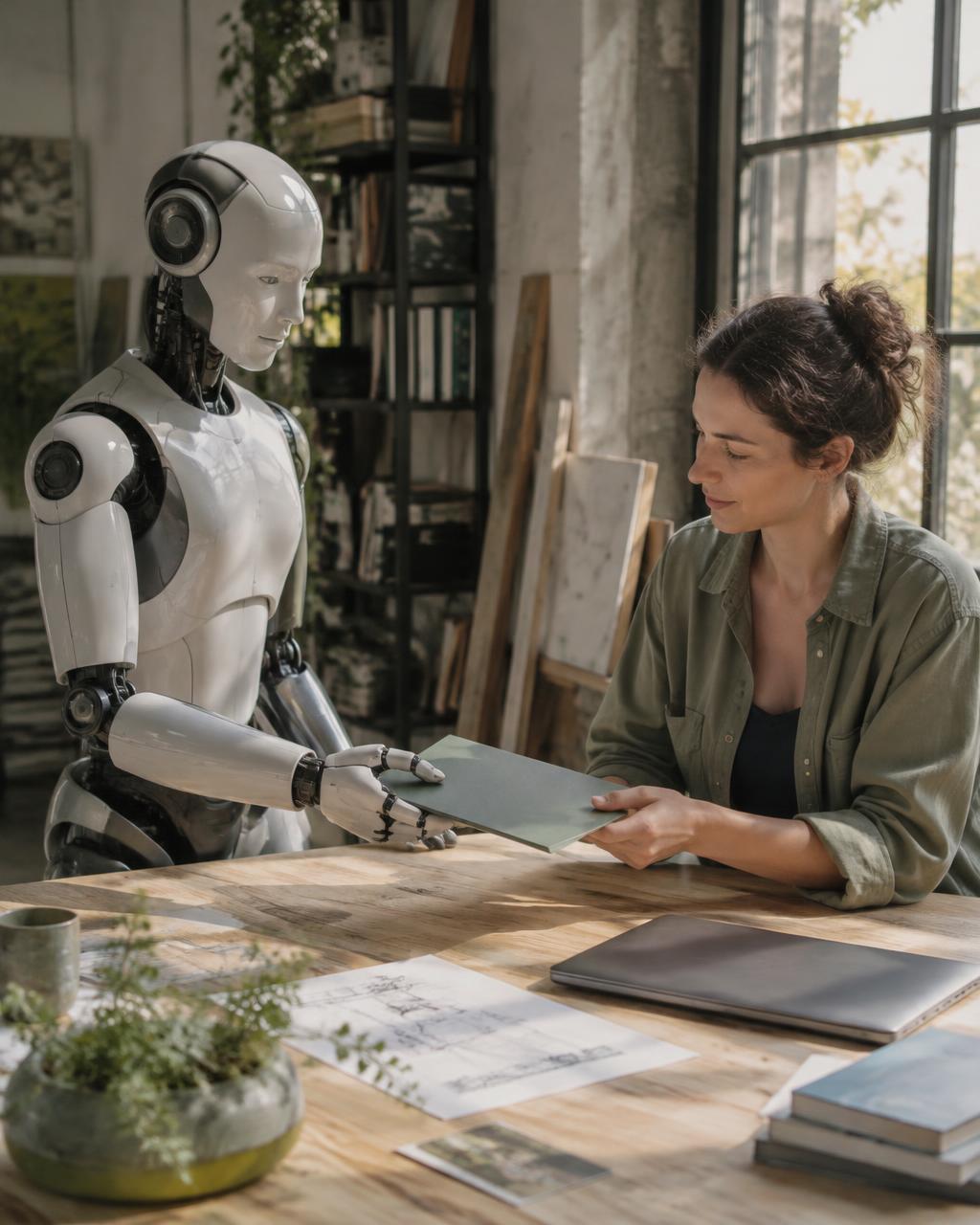
In this concept of human-centered robotics, people stay in control of decisions and interactions. The assistant is imagined as a quiet helper, not a replacement.
Illustrative Use Cases
Everyday Support
Carrying items between rooms
Moving documents, deliveries, or supplies from one space to another.
Preparing shared spaces
Setting up meeting rooms and common areas before people arrive.
Supporting routine workflows
Taking on predictable steps so teams can focus on judgment and care.
Helping organize supplies
Keeping shelves, storage, and stations tidy and easy to use.
Assisting with repeated tasks
Handling simple, recurring actions that fill the margins of a day.
Working in human-designed environments
A humanoid form imagined for doors, corridors, and desks built for people.
How It Fits
A Hypothetical Workday
Before the day begins
Prepare shared spaces — arranging rooms, refreshing stations, and readying common areas.
During the day
Support routine operations — small, repeatable steps that keep things moving.
Between meetings
Help move items and reset rooms so the next group walks into a ready space.
At the end of the day
Assist with simple recurring tasks — tidying, organizing, and closing down.
Note: this timeline is an example scenario for the Optimus concept and does not describe a real product's capabilities.
Human-Centered Design
People Stay at the Center
The concept's design priorities put people first. These are aspirations for the idea — not verified features.
- Clear interaction
- Simple, understandable ways for people to request and redirect help.
- Predictable roles
- Well-defined tasks so everyone knows what the assistant is there for.
- Human oversight
- People decide what happens, when, and where.
- Thoughtful integration
- Fitting into shared spaces respectfully, without disrupting them.
Questions
Frequently Asked
Contact
Request Information
Privacy Policy
Information we collect
The contact form on this page collects your name, phone number, and message.
How we use it
Information is used only to respond to your request.
Sharing
We do not sell personal data.
Your choices
You may request correction or deletion of your information at any time by calling +1 (404) 555-0182 or writing to 191 Peachtree Street NE, Atlanta, GA 30303.